Time:2024-05-14
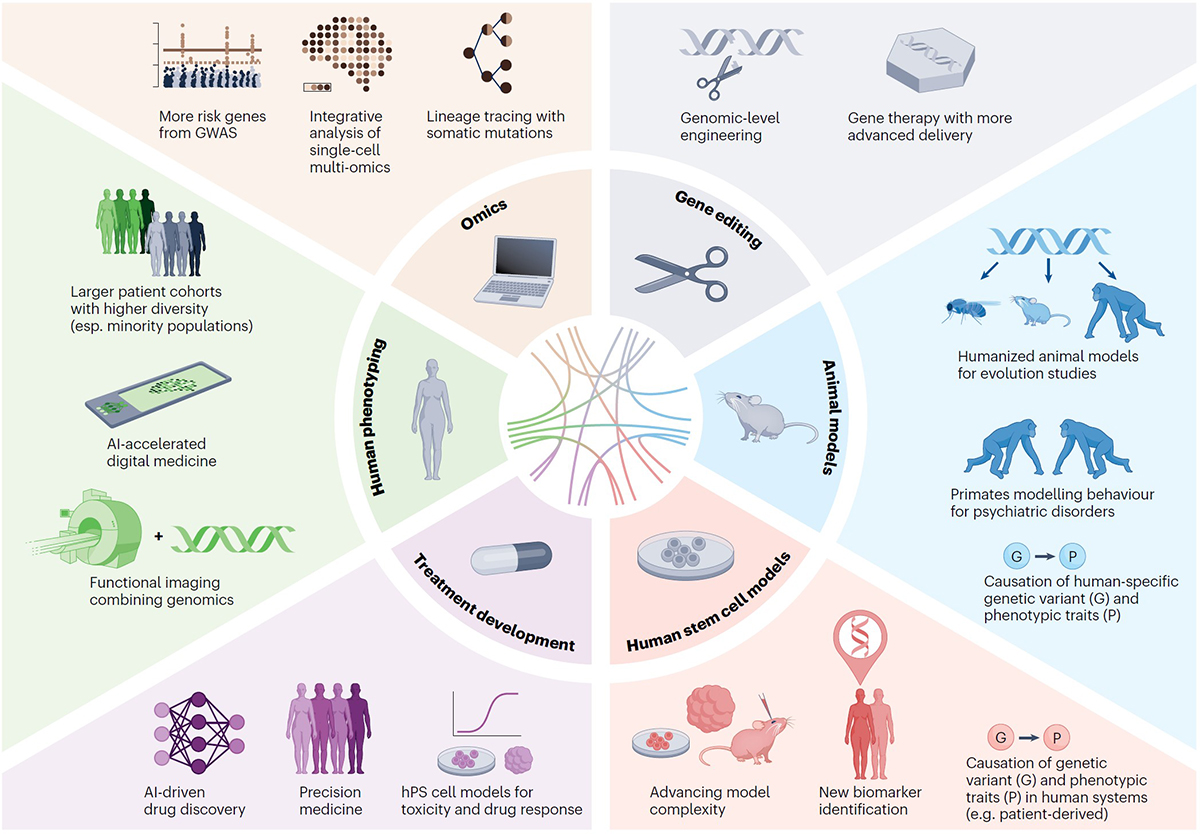
This figure is from our review article: Nature Reviews Genetics 2024, PMID: 37507490, https://doi.org/10.1038/s41576-023-00626-5. In this review, we summarized our current knowledge of complex genetic regulation of each key step of human brain development through the lens of evolutionary specialization and neurodevelopmental disorders and highlight the use of human stem cell-derived 2D cultures and 3D brain organoids to investigate human-enriched features and disease mechanisms. We also discuss opportunities and challenges of integrating new technologies to reveal the genetic architecture of human brain development and disorders. In this figure, each section of the circle depicts a different biotechnology domain that empowers the investigation of the genetics of human brain development, including human phenotyping studies (such as patient genetics and functional imaging), multidimensional molecular detection and manipulation tools (such as single-cell multi-omics, genome-wide association studies (GWAS), CRISPR-based tools and prime editing), animal and human pluripotent stem cell-based model systems (such as primate models, iPS cells, and 3D human brain organoids), and therapeutic development (such as compound screening, safety testing and efficacy testing). The lines in the center indicate that different biotechnology domains can integrate to generate synergistic effects. For each biotechnology domain, the outermost part of the figure depicts several future technology developments that we believe will lead to substantial improvements. Notably, all technology use and advancement in the biomedicine space ought to be supervised and guided by proper ethics.
 附件下载:
附件下载: 
