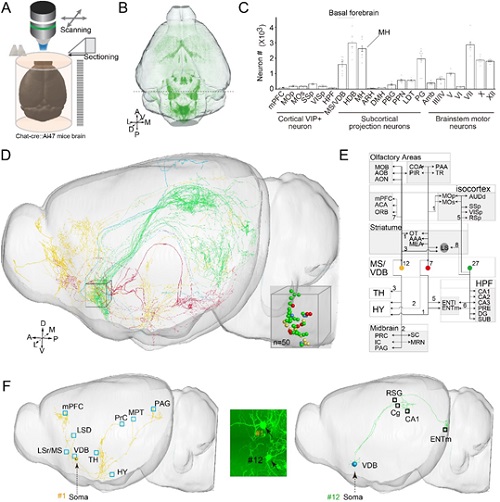
A recent study published in PNAS provides a precise 3-D whole-brain atlas for the cholinergic system and the complete morphology of individual cholinergic neuron in the basal forebrain.
A recent study published in Genome Biology demonstrated that an entire Chromosomecould be eliminated by CRISPR/Cas9-mediated genome editing. This work was performed by researchers in Dr. YANG Hui’s Lab at the Institute of Neuroscience and State Key Laboratory of Neuroscience, CAS Center for Excellence in Brain Science and Intelligence Technology, Chinese Academy of Sciences, and Dr. HU Jiazhi’sLab at the Peking University.

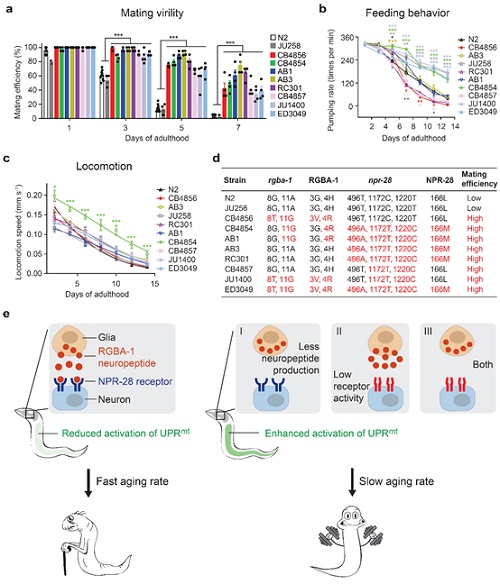
A recent study published in Nature uncovered the genetic basis of natural variation in aging rate. This work was carried out by researchers from Dr. CAI Shiqing’s lab at the Institute of Neuroscience and State Key Laboratory of Neuroscience, CAS Center for Excellence in Brain Science and Intelligence Technology, Chinese Academy of Sciences.
A recent study carried out by Dr.Tan et al from Dr. XIONG Zhiqi’s laboratory, at the Institute of Neuroscience, Chinese Academy of Sciences, showed that PRRT2 is a presynaptic protein that interacts with components of SNARE complex and down-regulates its formation.

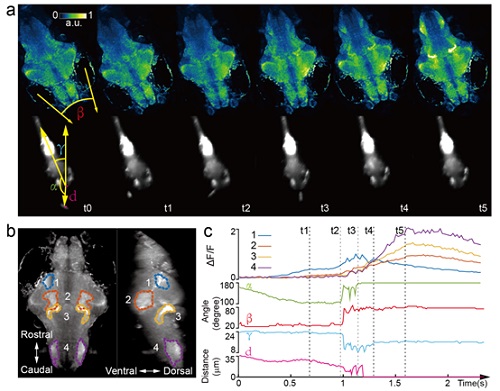
A new research from the Center for Excellence in Brain Science and Intelligence Technology, CAS, reported on a novel volume imaging and 3D tracking technique that monitors whole brain neural activity in freely swimming larval zebrafish. This study was carried out collaboratively between Dr. WANG Kai and Dr. WEN Quan.
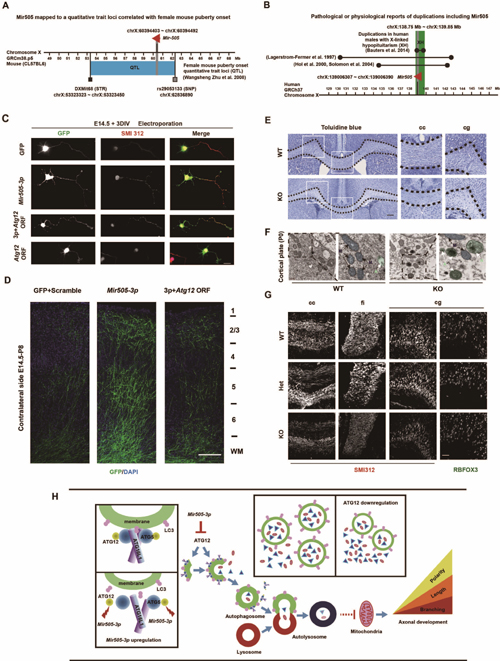
A recent study published in Autophagy demonstrated that Mir505-3p regulated axonal development by targeting Atg12 and autophagy pathway. This work was performed by researchers in Dr. ZHOU Yuxun’s team at the Donghua University and Dr. QIU Zilong’s Lab at the Institute of Neuroscience, Chinese Academy of Sciences.This work provided another evidence supporting the role of autophagy in neural development.
A recent study carried out by Dr. SUN Yangang’s lab discovered a central neural circuit that is critical for transmitting the itch signal. The study was published in Science.

A recent study entitled “A critical role of pre-synaptic cadherin/catenin/p140Cap complexes in stabilizing spines and functional synapses in the neocortex” from Dr. YU Xiang’s lab at the Institute of Neuroscience, Chinese Academy of Sciences was published in Neuron on June 21, 2017. The effect of the cadherin/catenin requires p140Cap —— a novel β-catenin interacting partner.
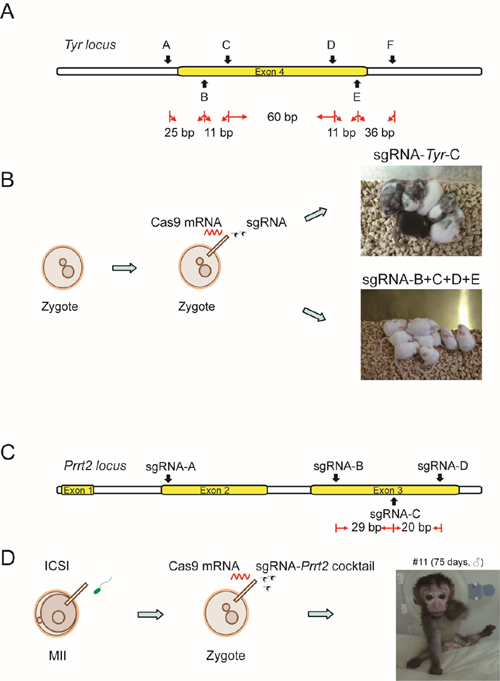
A recent study published in Cell Research demonstrated that single gene or multiple genes could be nearly 100% deleted in all cells of CRISPR/Cas9-injected mice and monkeys, using a modified “C-CRISPR” approach.
A recent study published in Cell Research demonstrated that homology-mediated end joining (HMEJ)-based strategy can induce robust and efficient DNA targeted integration using CRISPR/Cas9. This work was performed by researchers in Dr. YANG Hui’s Lab.

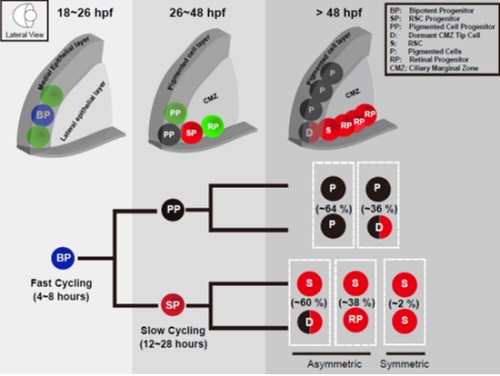
Using zebrafish and cytobow-based clonal analysis, Dr HE Jie's team identified the cells in the second or the third layer of the CMZ as the RSCs which were slow-cycling as compared to retina progenitors in CMZ. Moreover, the study also identified a novel set of dormant CMZ tip cells, which may serve as a critical cellular component in the niche.
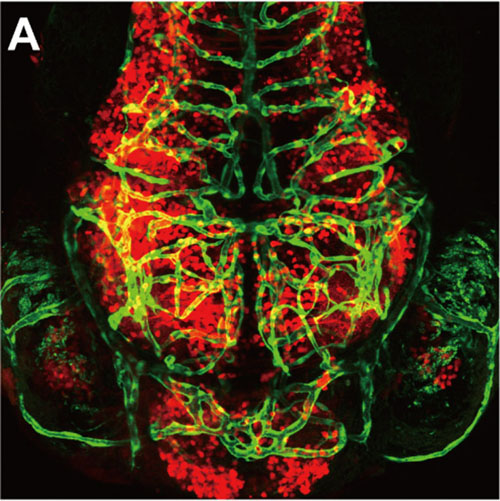
A recent study published online in Cell Research reported that neurons transfer miR-132 into brain vascular endothelial cells (ECs) via exosomes to promote brain vascular integrity. This study was performed by Dr. DU Jiulin’s research group in the Institute of Neuroscience and the Center for Excellence in Brain Science and Intelligence Technology, Chinese Academy of Sciences.
A recent study by Dr. YAN Jun’s lab at the Institute of Neuroscience, Chinese Academy of Sciences, was published in Nucleic Acids Research on March 8. It uncovered that a class of enhancer-associated circadian long noncoding RNAs (lncRNAs) mark the genomic loci modulating long-range circadian gene regulation.

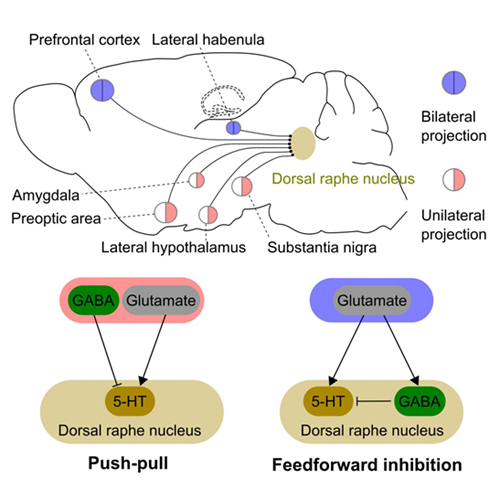
A recent study published in Cell Reports systematically analyzed the circuit mechanism underlying dynamic control of serotonergic neuron in the rodent brain. This work was performed by researchers in Dr. SUN Yangang’s Lab. This work advanced our understanding of the mechanisms regulating the serotonin system, which could have important impact on studying the mechanisms of mental disorder.
A recent study published in PNAS demonstrated that monkeys showed spontaneous mirror self-recognition (MSR) behaviors after learning precise visual-proprioceptive association for mirror images. This work was performed by researchers in Dr. GONG Neng’s team.

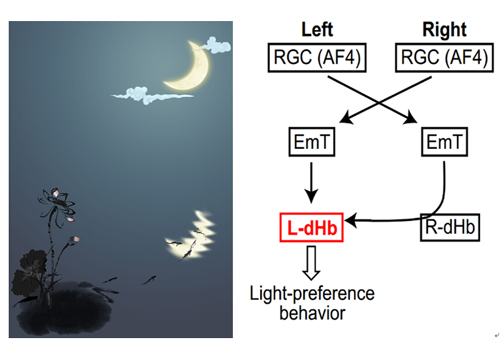
A recent study published online in Neuron discovered that visual inputs from an asymmetrical pathway in larval zebrafish, comprising of a specific subset of RGCs, EmT and L-dHb mediates light-preference behavior. This work was performed by Dr. DU Jiulin’s research group.
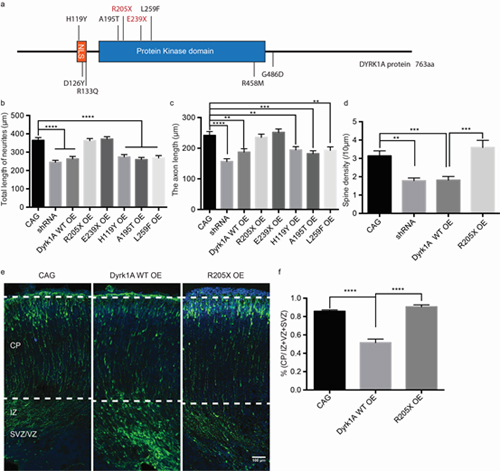
A recent study published in Molecular Psychiatry demonstrated that autism-associated Dyrk1a truncations inhibit neural dendritic and spine growth and interfere with cortical migration during development. This work was performed by Dr. QIU Zilong’s Lab.
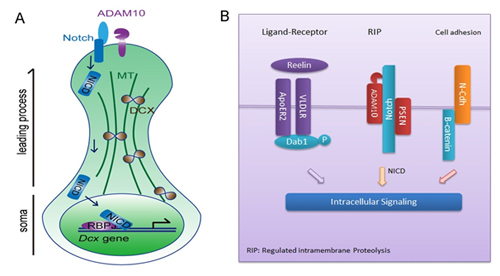
Recently a research finding describing the critical role of ADAM10-initiated release of Notch intracellular domain in the radial migration of cortical neurons was published online in Cerebral Cortex. In this work, researchers from Dr. XIONG Zhiqi’s lab.
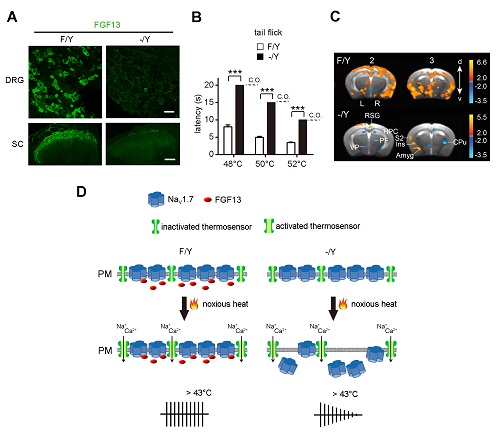
A recent study published in Neuron shows that fibroblast growth factor 13 (FGF13) plays a critical role in the regulation of heat nociception. This research work was carried out by Dr. ZHANG Xu’s Lab at the Institute of Neuroscience, Chinese Academy of Sciences.
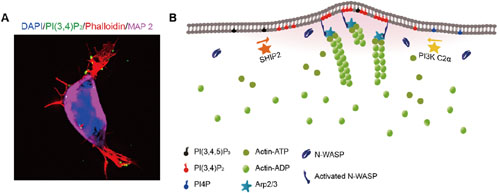
Using cultured rat hippocampal neurons and a combination of live imaging and pharmacological treatments, YU Xiang's lab showed that one or two large actin aggregates formed underneath the membrane of newborn neurons and served as the start sites of neurite initiation.
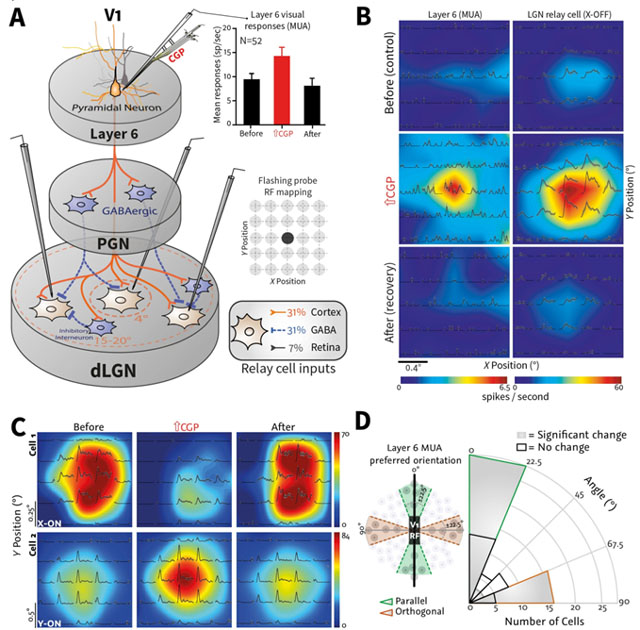
In a recent paper from Dr WANG Wei's group, published online in Cerebral Cortex on December 17th 2016, the researchers used focally specific causal manipulation to study a key feedback connection in the visual system (the corticothalamic loop).
Researchers from Dr. WANG Wei’s lab at ION took advantage of the known differences between the perception of dark and bright stimuli to test whether such asymmetries also exist for bright and dark afterimages, and then probe the underlying neuronal mechanisms generating afterimage perception.
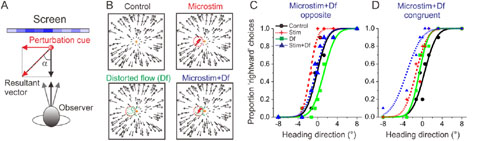
A recent study published in Cerebral Cortex proved that the motion direction signals in macaque middle temporal area are causally involved in heading perception based on visual optic flow cue. This work was performed by researchers in Dr. Gu’s lab at the Institute of Neuroscience, Chinese Academy of Sciences.
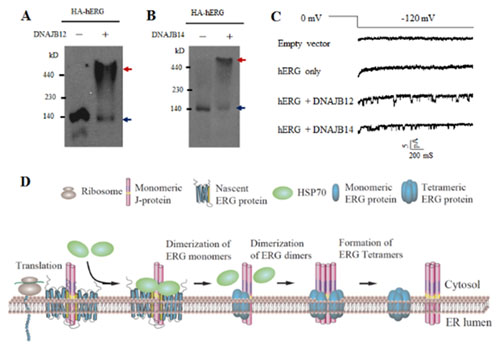
Researchers from Dr. CAI Shiqing's lab at the Institute of Neuroscience, State Key Laboratory of Neuroscience, Center for Excellence in BrainScience and Intelligence Technology, CAS, demonstrate the critical role of ER-located co-chaperone proteins in regulating potassium channel subunit stabilization and tetrameric assembly.